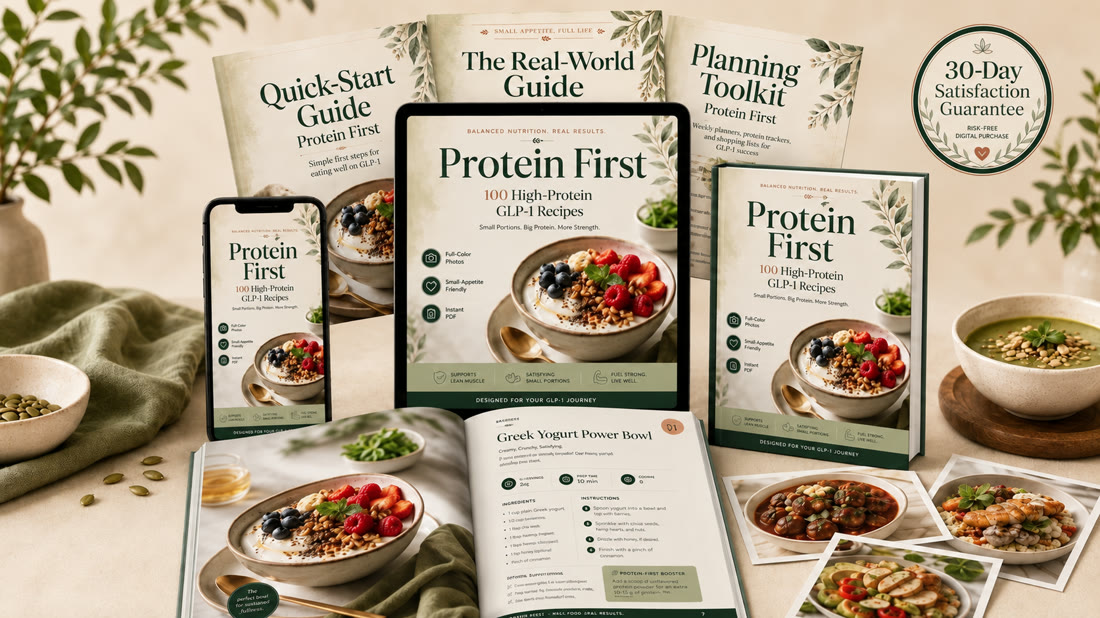
Also suitable for adults using other clinician-prescribed GLP-1 or GLP-1/GIP medications.
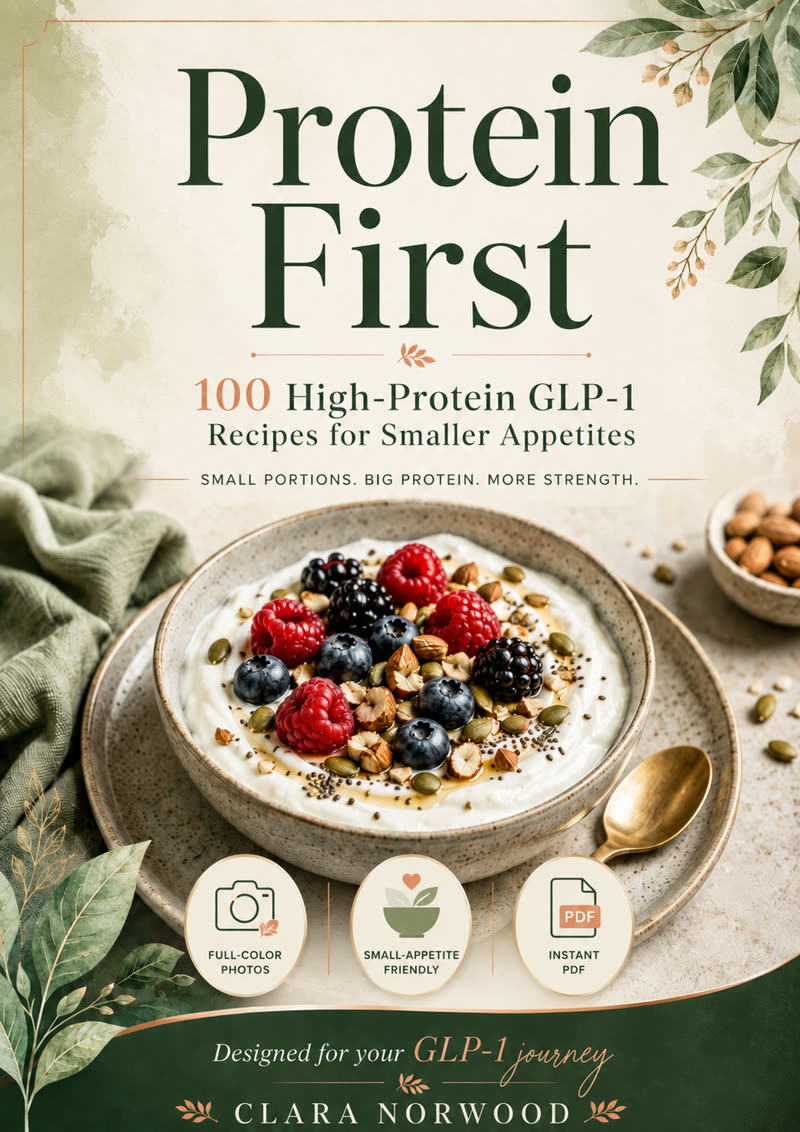
100 photographed, high-protein recipes created for smaller appetites, low-energy days and the moments when nothing sounds good — so getting enough protein no longer feels like another full-time job.
Instant digital download · Read on any device · Yours to keep
Educational nutrition resource. Not medical advice.
Medication names are used only to help readers identify whether the guide may be relevant to their experience. Protein First is not affiliated with or endorsed by any medication manufacturer.
Before starting a GLP-1, planning a meal probably meant deciding what you wanted to eat. Now it may mean trying to find something — anything — that sounds manageable.
You feel full after a few bites. Foods you used to enjoy suddenly feel too heavy. Some days you are hungry, while on other days the thought of a full meal is exhausting. And in the middle of all that, you keep hearing that you should be eating more protein.
You open the refrigerator, look around and close it again because every option feels too heavy or unappealing.
You begin a meal with good intentions but feel finished after only a few bites.
You know protein matters, but standard meal plans assume an appetite and portion size you no longer have.
The number on the scale is falling, but you may also feel less energetic, less steady or less strong.
You wanted weight loss — not a softer body, reduced strength or the hollow, tired appearance often called "Ozempic face."
Every meal becomes another decision: what to eat, how much to eat and whether it contains enough protein to matter.
You are not failing your medication or your diet. You simply need an eating strategy built for the appetite you have now — not the appetite you had before.
GLP-1 and related medications can significantly change appetite and the experience of eating. Nausea, decreased appetite, vomiting and constipation are among the commonly reported reactions associated with tirzepatide. During meaningful weight loss, some lean tissue may also be lost alongside body fat, although the amount varies considerably between individuals and studies.
That does not mean the medication is "eating your muscle." It means that rapid weight loss, reduced food intake, individual health factors and physical activity can all affect body composition.
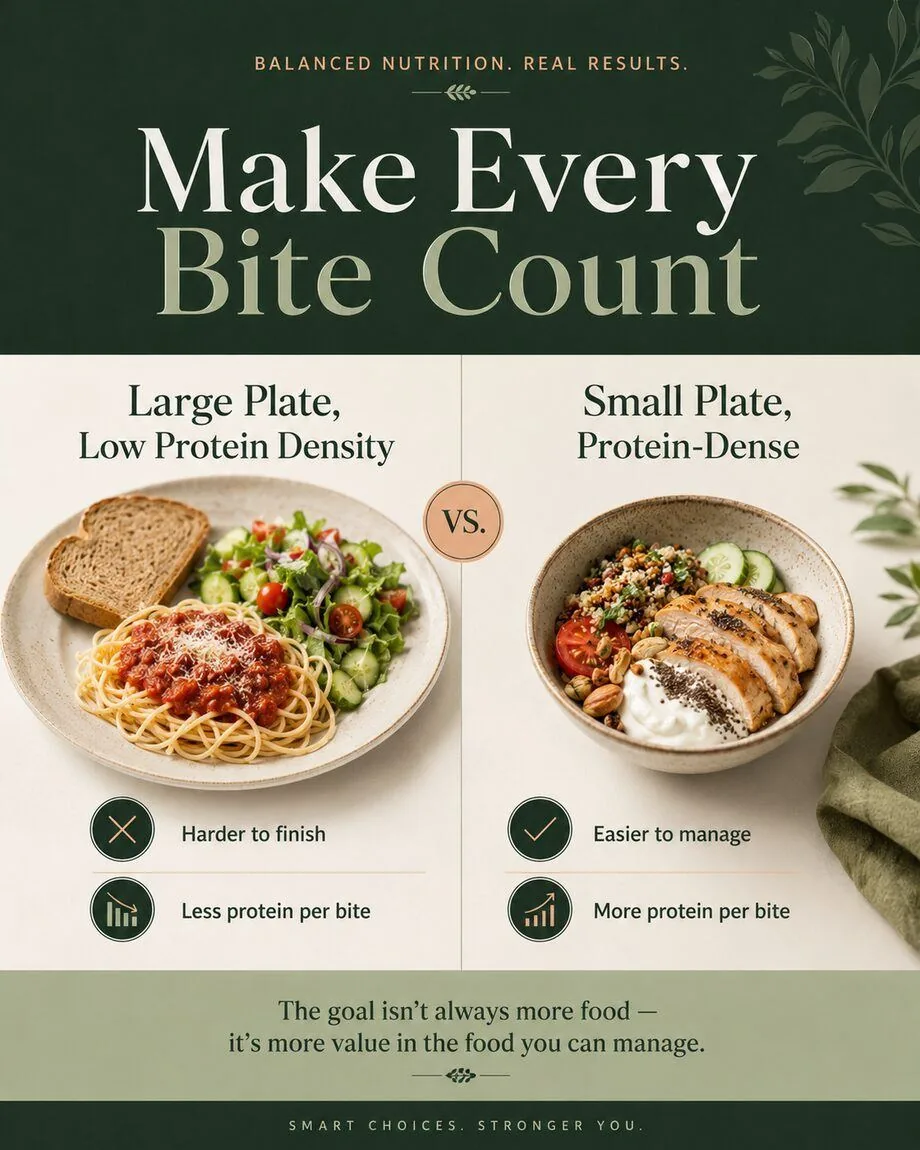
The goal is not to force yourself to eat enormous meals. The more practical goal is to make the food you can comfortably eat more protein-dense and nutritionally useful.
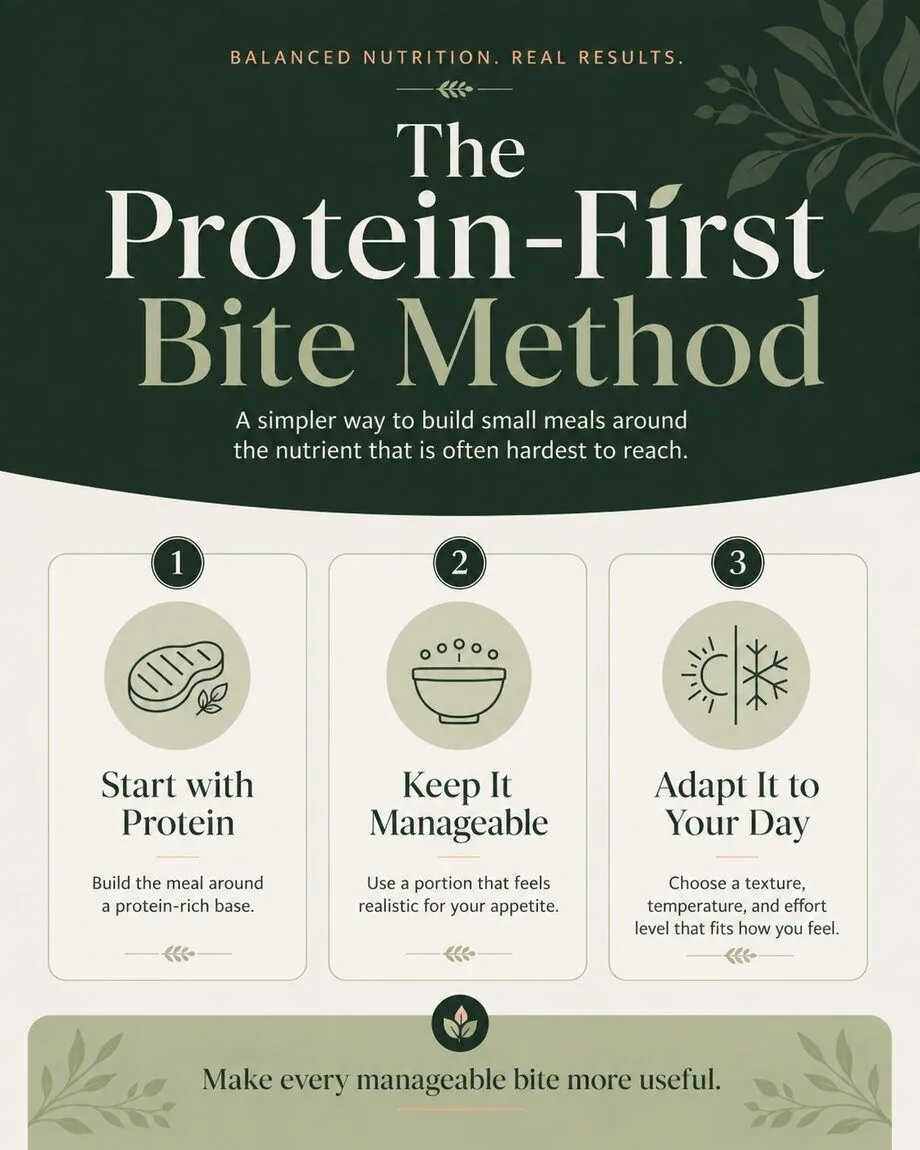
A simpler way to build small meals around the nutrient that is usually hardest to reach.

Every recipe begins with a meaningful protein source instead of treating protein as an afterthought.
The recipes are designed around smaller servings, softer textures and foods that can be easier to approach when appetite is limited.
Use the recipe tags to find options for low-appetite days, low-energy days, sensitivity to smells, no-cook meals or days when your appetite feels steadier.
You do not need perfect eating. You need reliable options that help the few bites you take count.

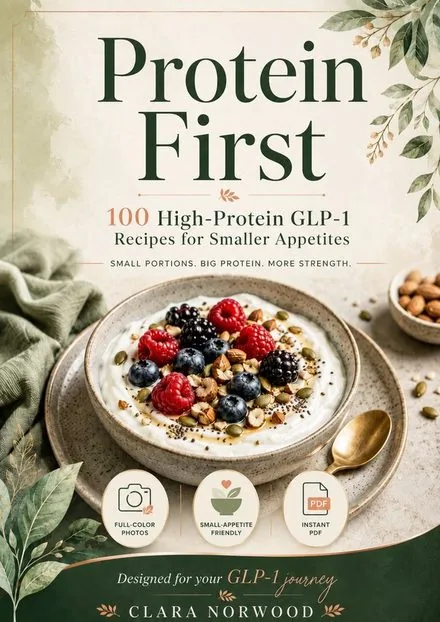
100 High-Protein GLP-1 Recipes for Smaller Appetites
Protein First is a full-color digital recipe book created around the real challenges of eating while using a GLP-1 or GLP-1/GIP medication.
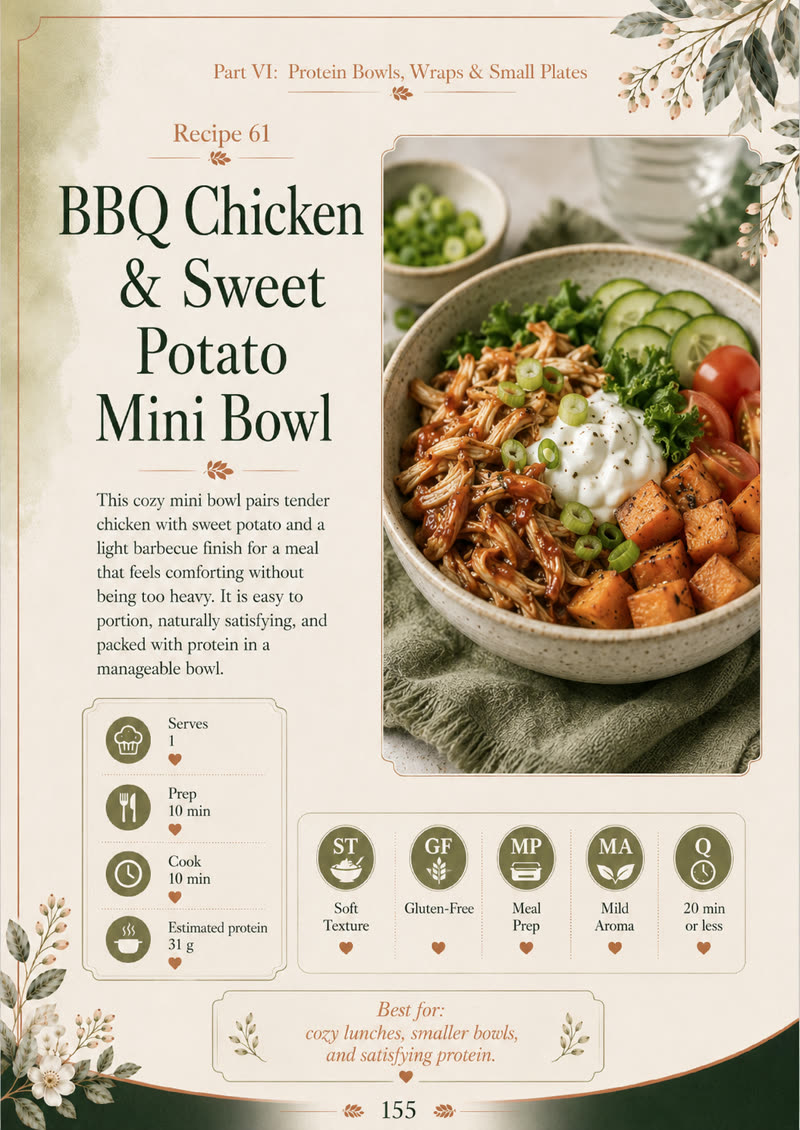
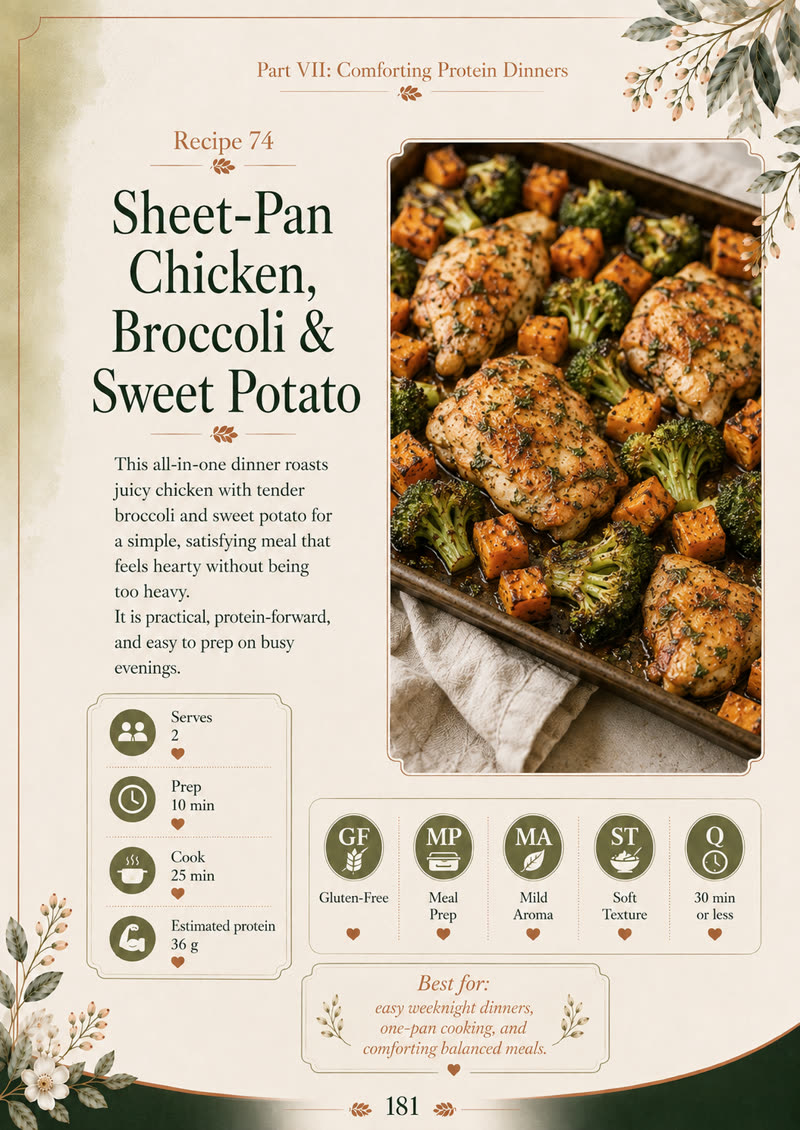
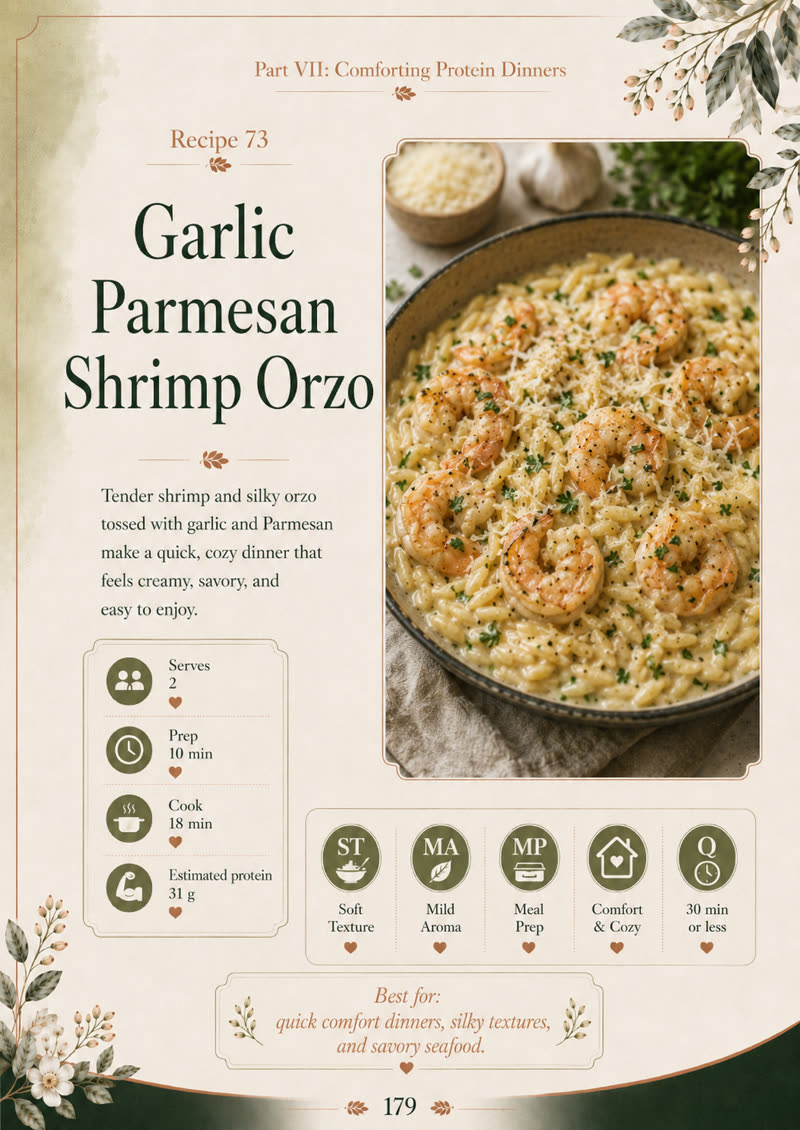
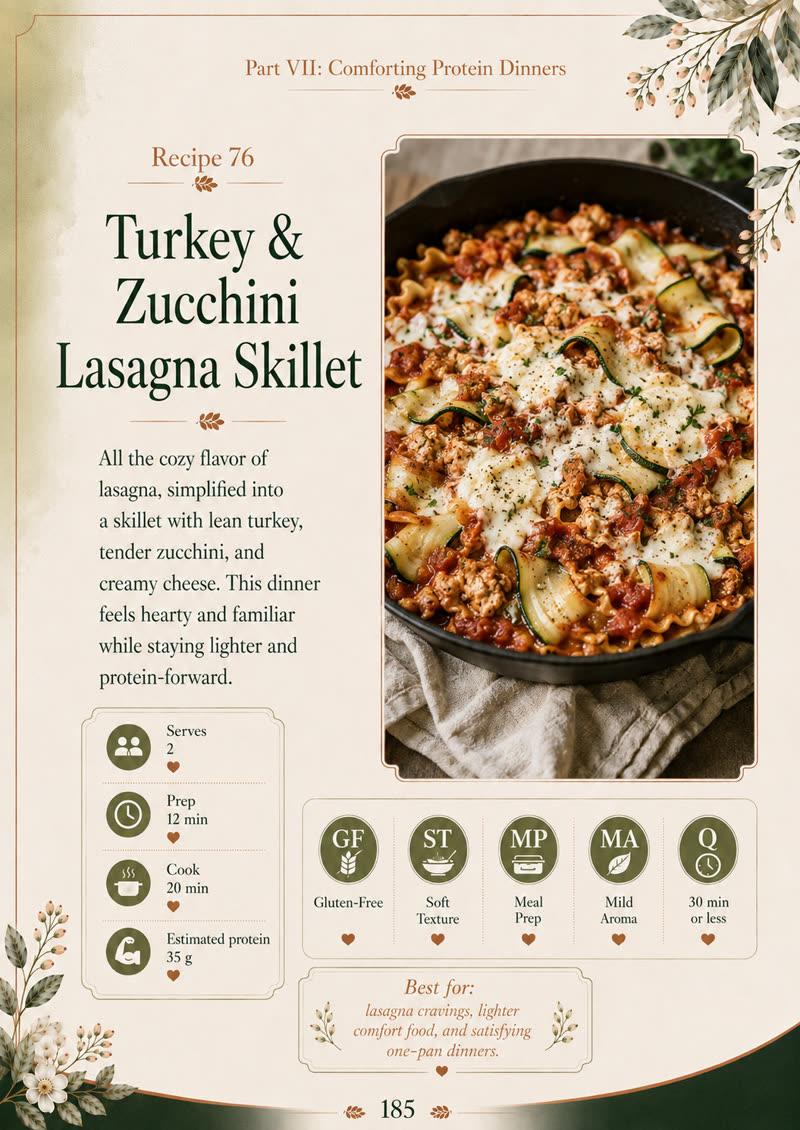
Inside, you will find 100 approachable recipes with photographs, detailed instructions, protein estimates, manageable serving suggestions and simple ways to increase or reduce the protein according to your personal nutrition plan.
Instead of scrolling through social media every time you need to eat, you can open the book, choose how you feel today and find an option that fits.
Download today and begin with your next meal.

Protein First is delivered as an instant PDF. Open it wherever you cook, print the pages you use most, and keep it forever — no app and no subscription required.
Not just a collection of recipes — a practical system for choosing, preparing and adjusting your meals.
A complete range of breakfasts, smoothies, soups, small plates, lunches, dinners, snacks and lighter desserts.
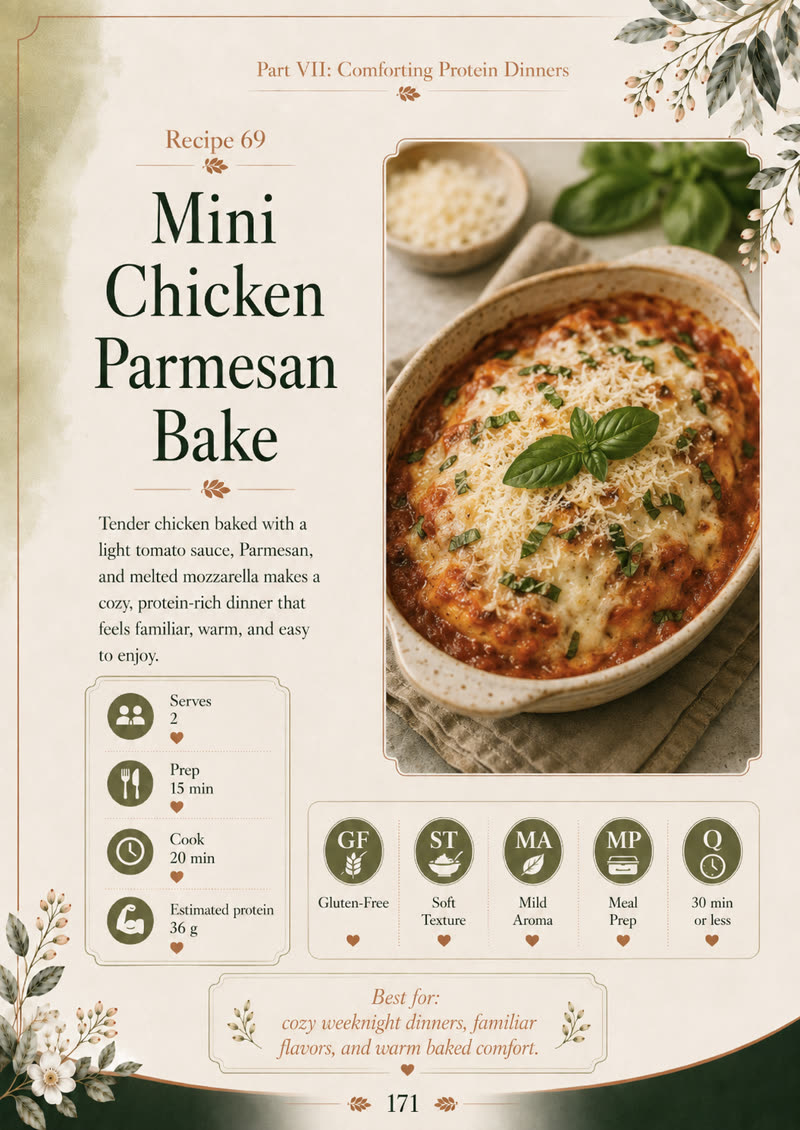
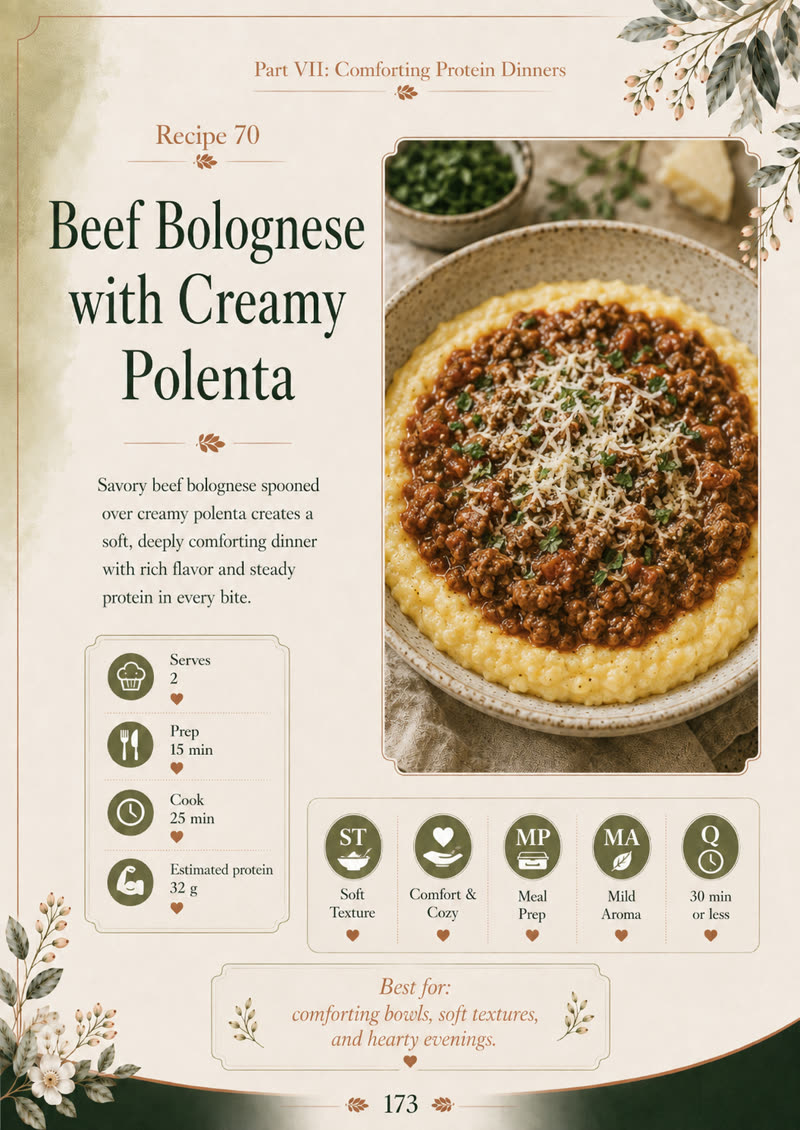
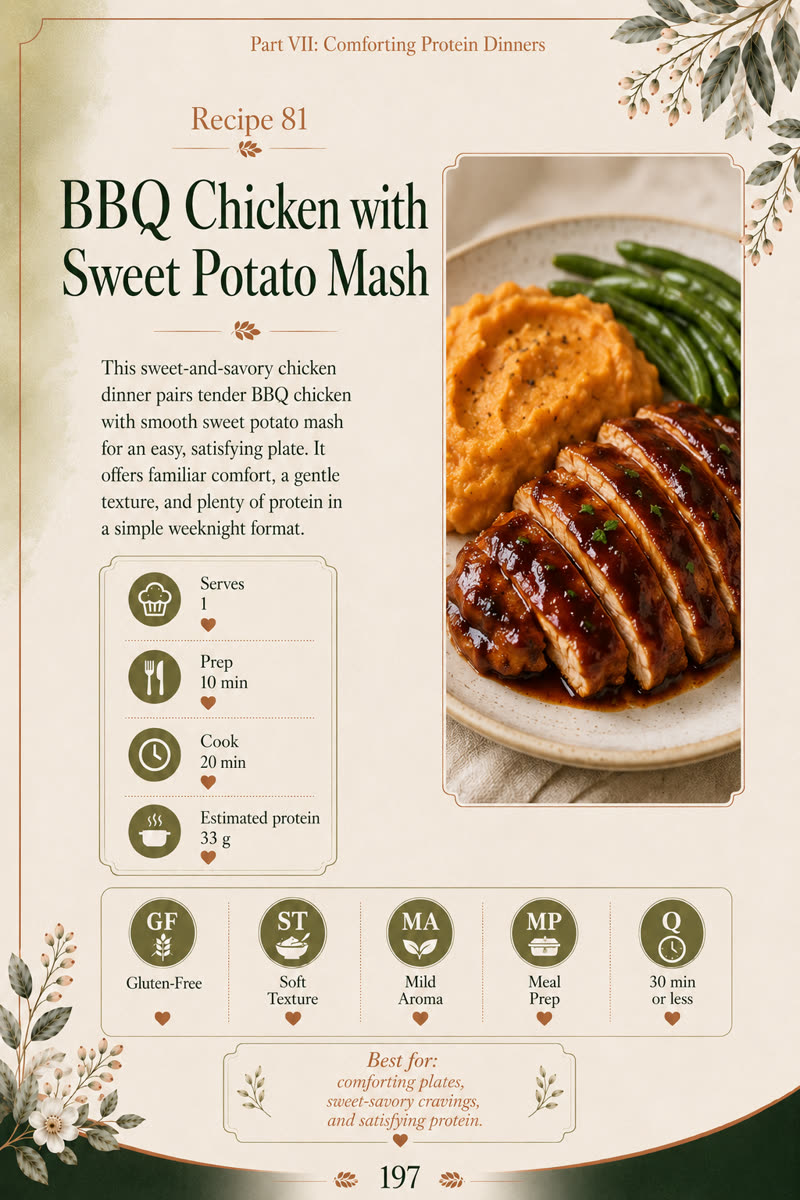
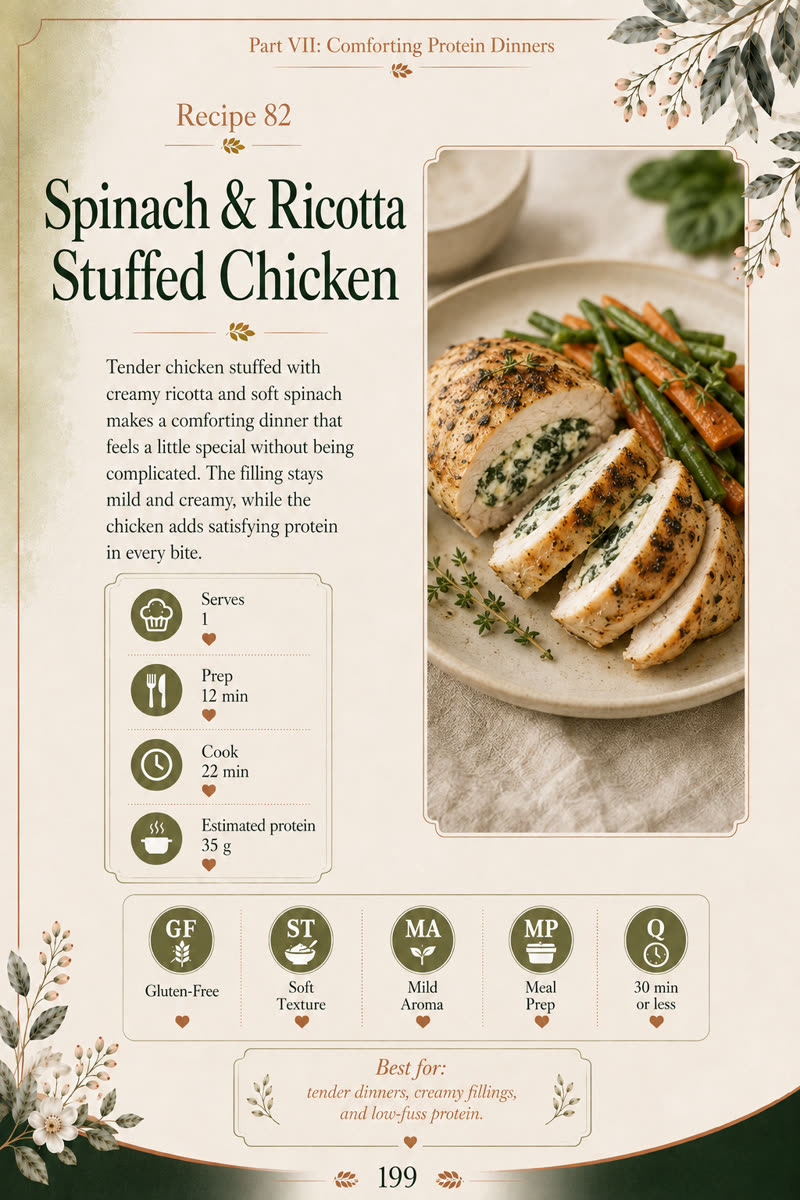
See exactly what you are preparing before you begin. No vague descriptions or mystery meals.
Each recipe shows an estimated amount of protein per serving, helping you understand how it may fit into the target established with your clinician or dietitian.
Learn how to increase the protein in a recipe with realistic additions such as Greek yogurt, cottage cheese, eggs, lean meat, fish or protein powder when appropriate.
See how to prepare a manageable portion without feeling pressured to finish a conventional oversized meal.
Recipes clearly identify preparation time, cooking time and whether they can be made ahead, frozen or prepared without cooking.
Quickly locate recipes marked for low appetite, cooler temperature, softer texture, low aroma, no cooking or steadier-appetite days.
Replace ingredients according to preference, availability, food tolerance or dietary restrictions.
Understand how to begin, organize your kitchen and choose recipes without becoming overwhelmed.
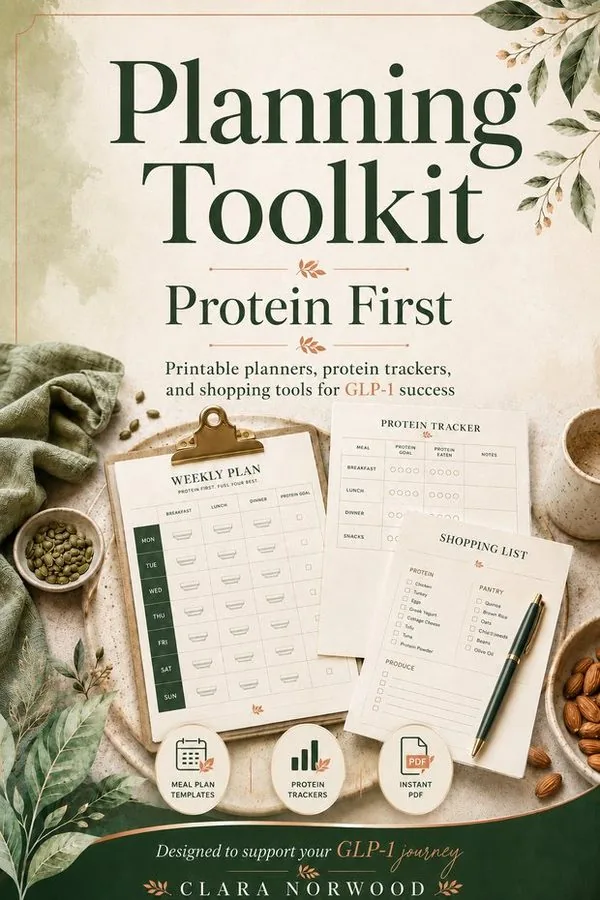
Use the shopping list, protein tracker and weekly recipe planner on paper or digitally.
From cold, sippable meals to comforting dinners — choose according to your appetite, energy and food tolerance.
Cottage Cheese Egg Bites · Greek Yogurt Cheesecake Bowl · Soft Scrambled Eggs with Ricotta · Mini Turkey Breakfast Wrap · Cinnamon Protein Oats. Fast, manageable breakfasts that help you begin the day with protein without a heavy plate.
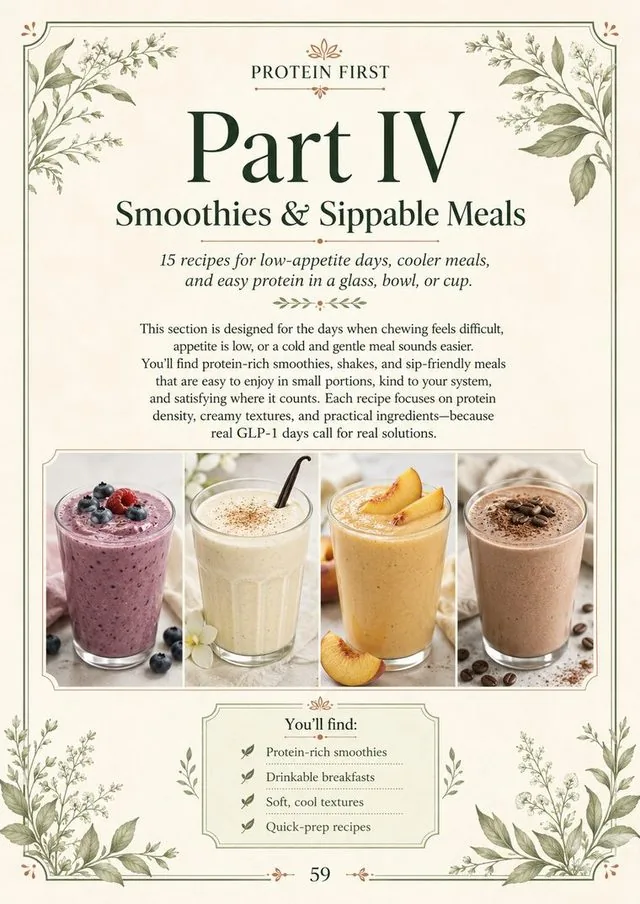
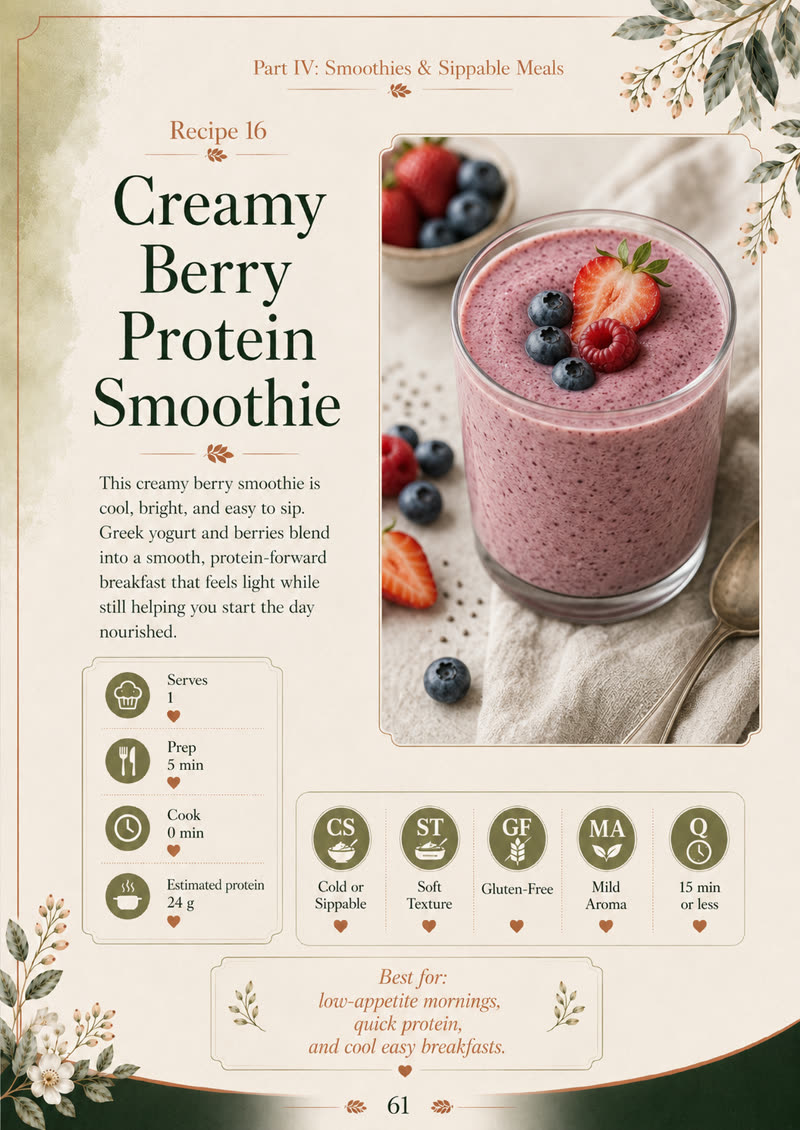
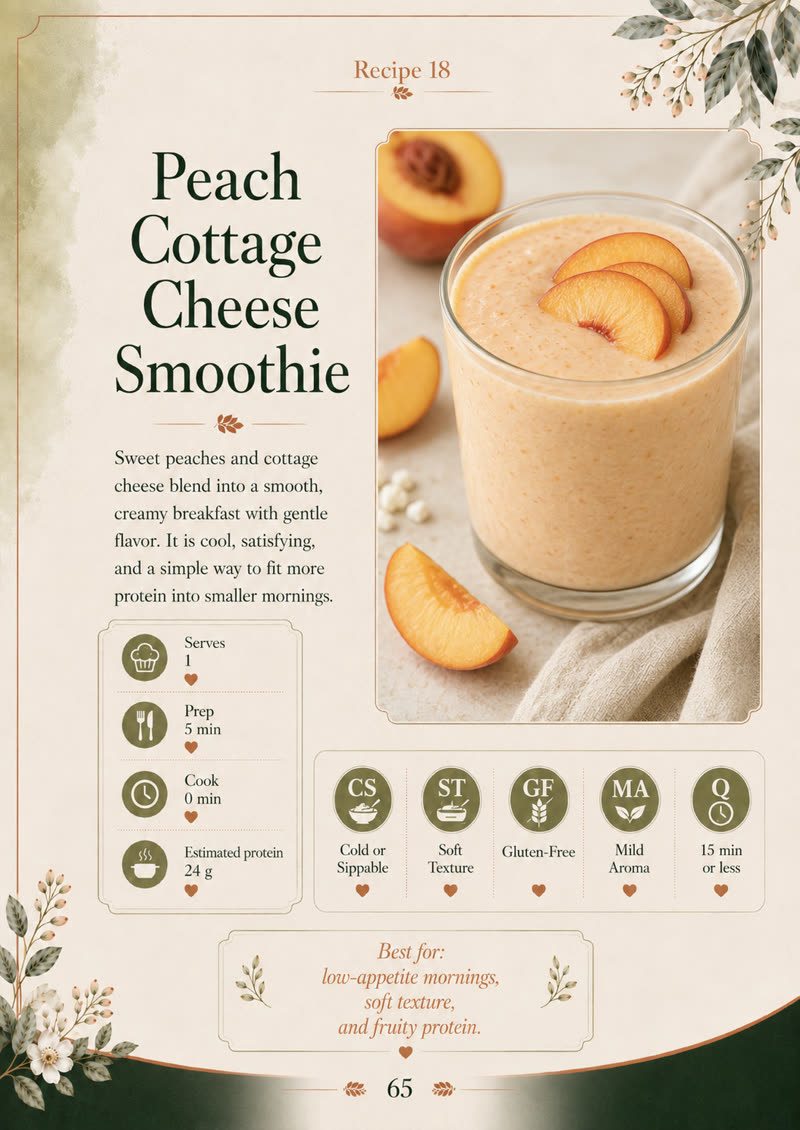
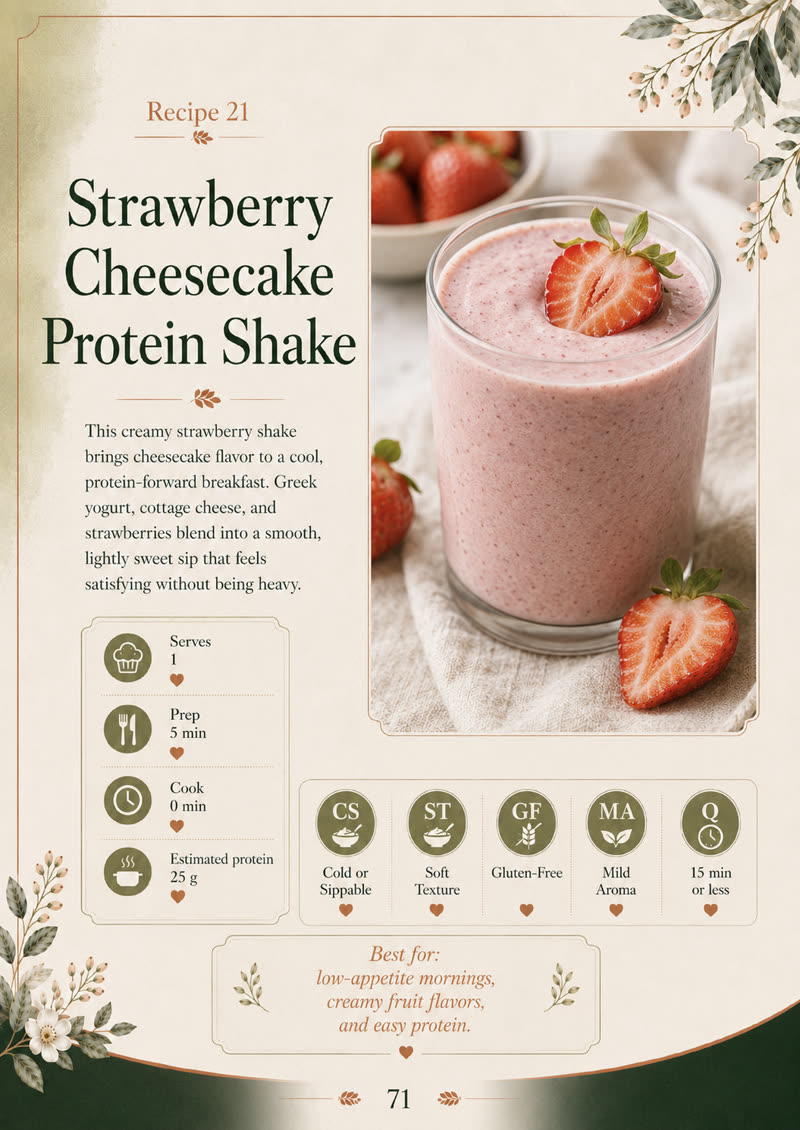
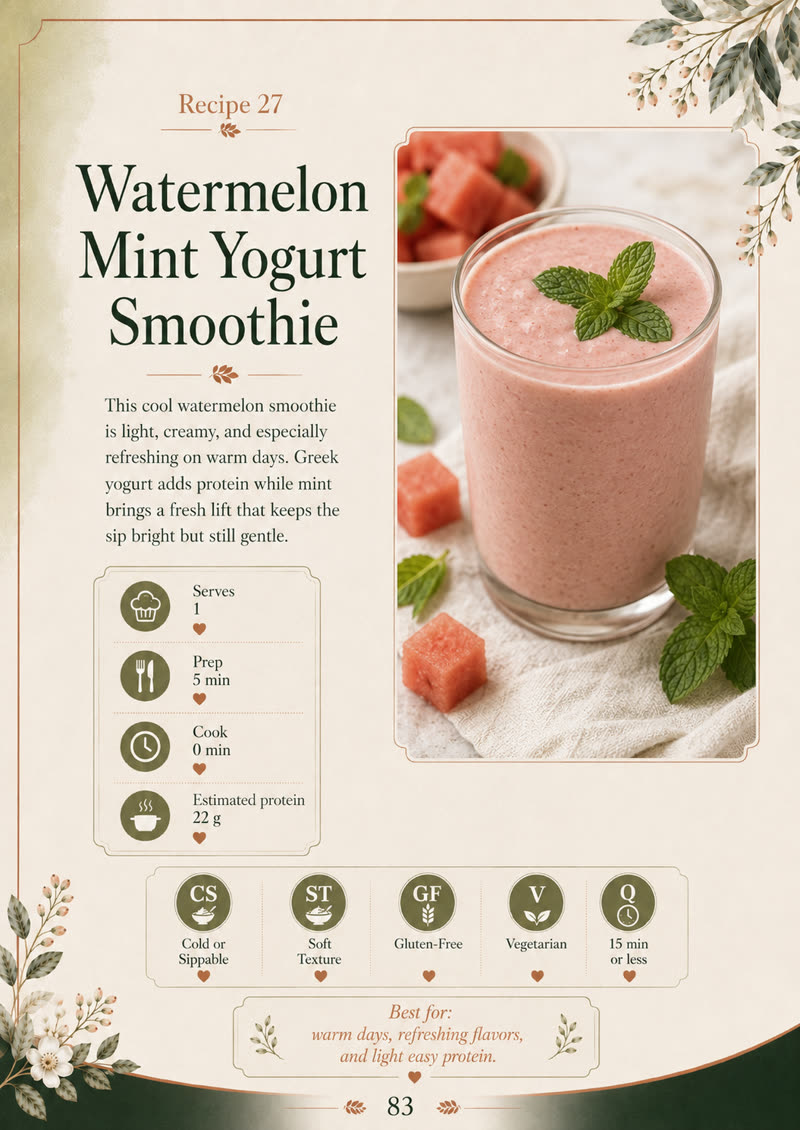
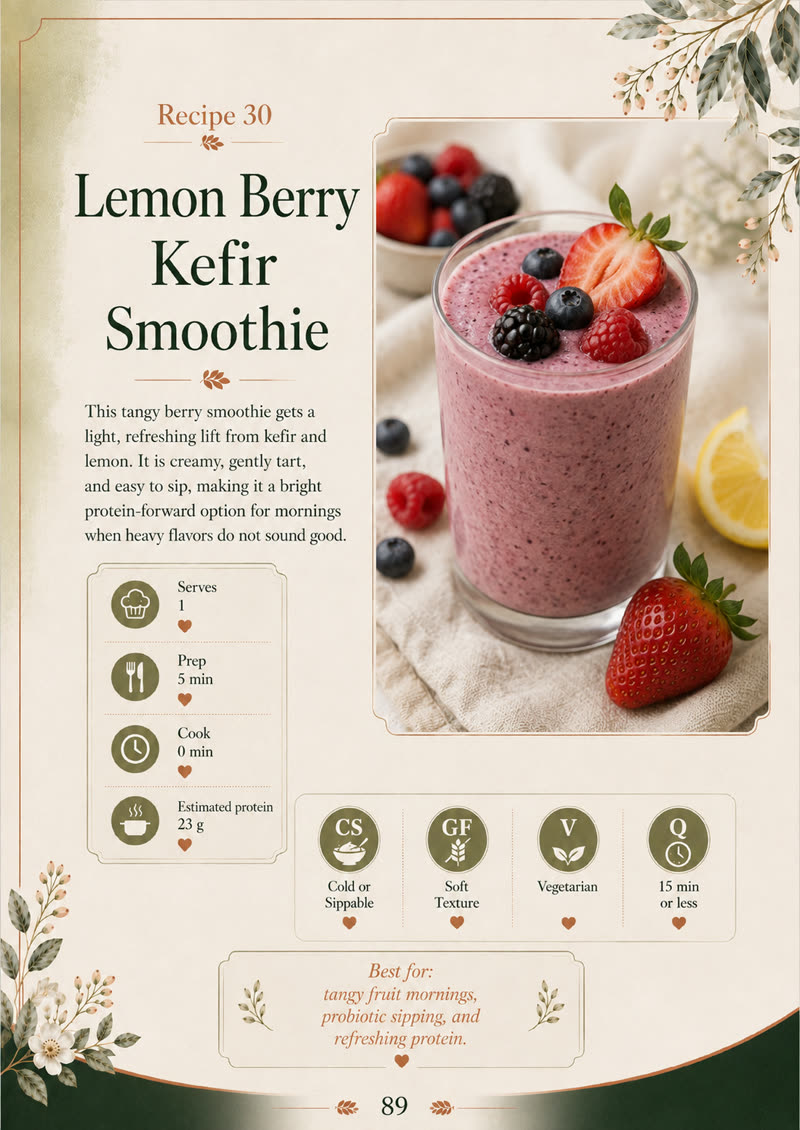
Creamy Berry Protein Smoothie · Vanilla Banana Yogurt Shake · Peach Cottage Cheese Smoothie · Iced Mocha Protein Shake · Gentle Ginger Mango Smoothie. Cooler, easy-to-sip options for days when chewing or a full meal feels difficult.
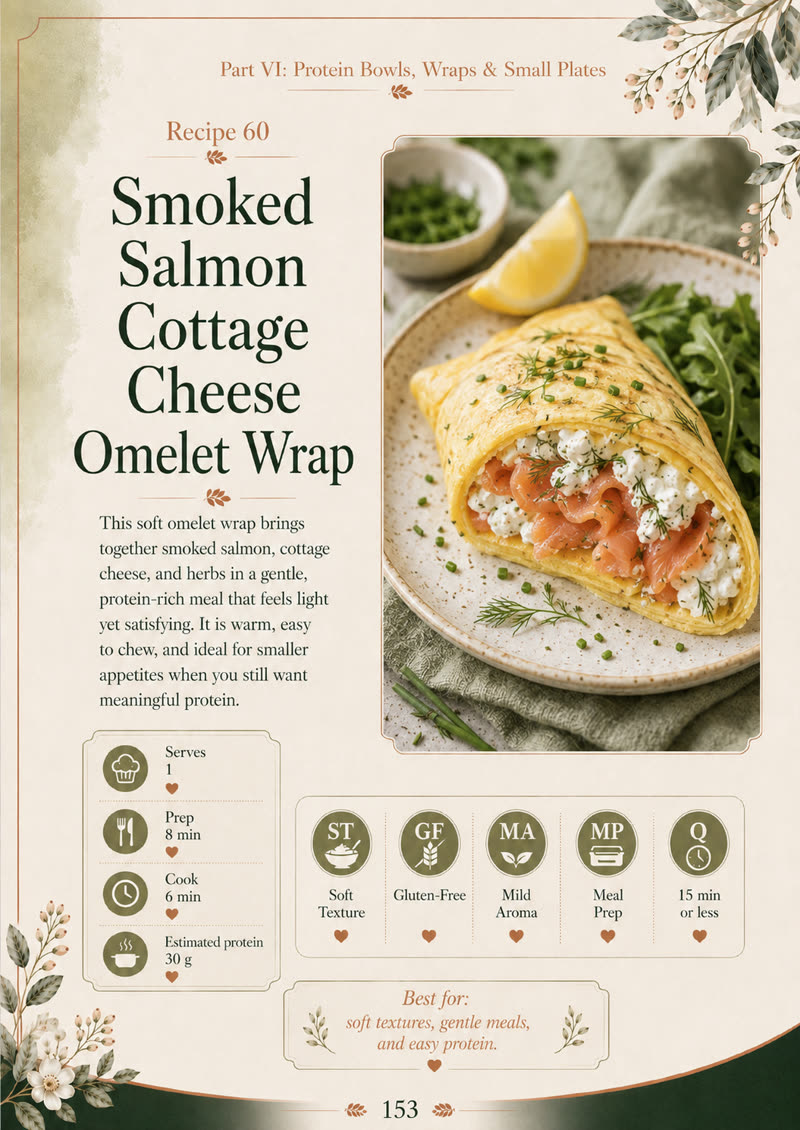
Turkey Hummus Pinwheels · Chicken Avocado Mini Bowl · Tuna Yogurt Cucumber Cups · Cottage Cheese Chicken Salad · Salmon Egg Salad Plate. Lighter meals with familiar ingredients, short prep times and practical portions.
Ginger Turkey Rice Bowl · Lemon Chicken Quinoa Bowl · Beef Taco Protein Bowl · Mediterranean Tuna Plate · Mini Chicken Caesar Wrap. Flexible meals you can adjust to appetite and batch-prep for the week.
Creamy Herb Chicken · Soft Turkey Meatballs · Garlic Butter Salmon · High-Protein Chicken Parmesan · Lean Beef Cottage Pie. Comforting evening meals that still prioritize protein without oversized servings.
Lemon Chicken Protein Soup · Creamy Turkey Vegetable Soup · Blended Chicken and Potato Soup · Soft Egg Drop Protein Soup · Creamy Salmon Chowder. Warm, softer options for days when texture matters.
Chocolate Greek Yogurt Mousse · Frozen Berry Yogurt Bites · Mini Protein Cheesecake Cups · Cinnamon Cottage Cheese Cream · Peanut Butter Yogurt Dip. Small options that add useful protein without feeling like another full meal.
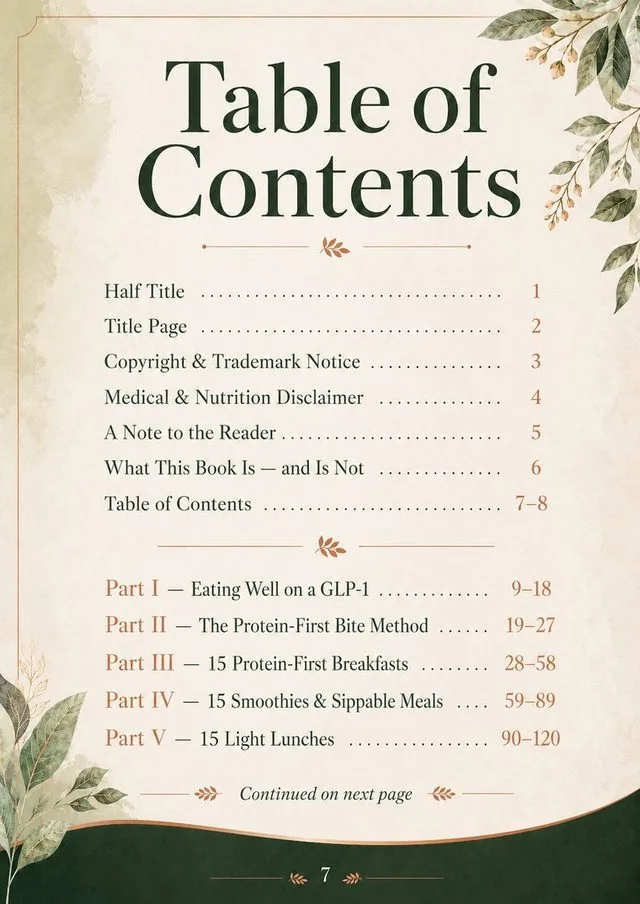
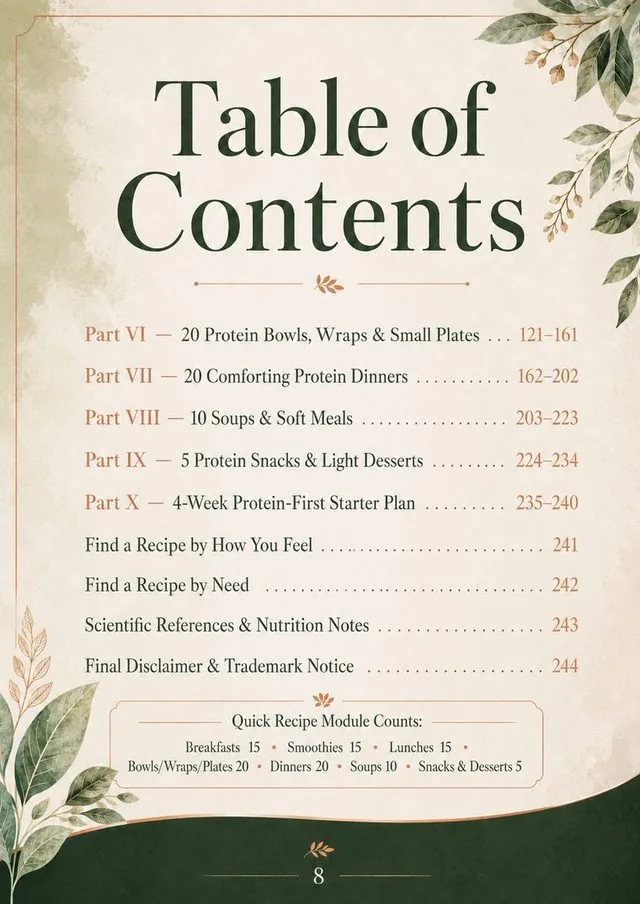
15 + 15 + 15 + 20 + 20 + 10 + 5 = 100 recipes
Familiar flavors, manageable portions and no complicated ingredients required.

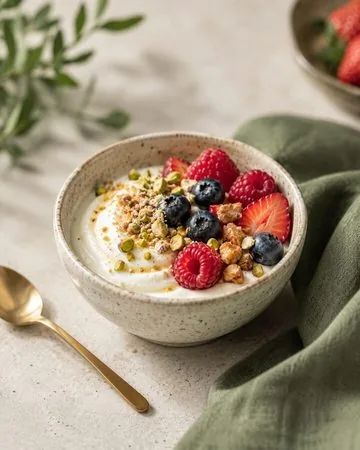
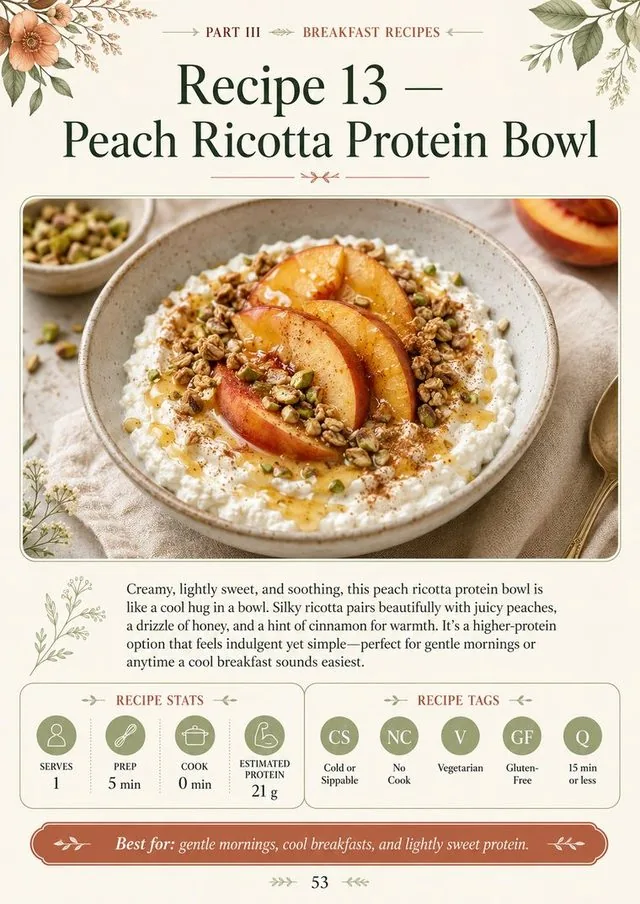
A smooth breakfast or snack made with Greek yogurt, soft fruit and a crunchy topping you can add only when it sounds good.

A light, comforting soup with shredded chicken and a fresh lemon finish.

Soft, savory egg bites that can be reheated individually whenever you are ready to eat.

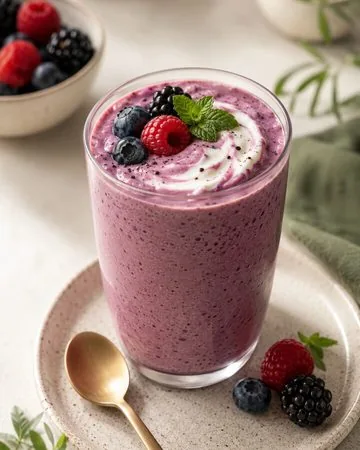
A cool berry smoothie with adjustable thickness and simple options for increasing protein.

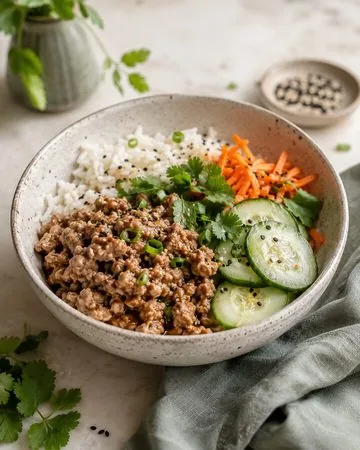
Lean ground turkey, soft rice and vegetables with a mild ginger sauce that can be adjusted to taste.

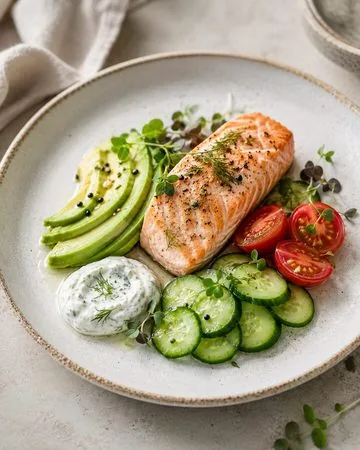
A simple plate combining salmon, avocado and a creamy yogurt dressing in a manageable serving.
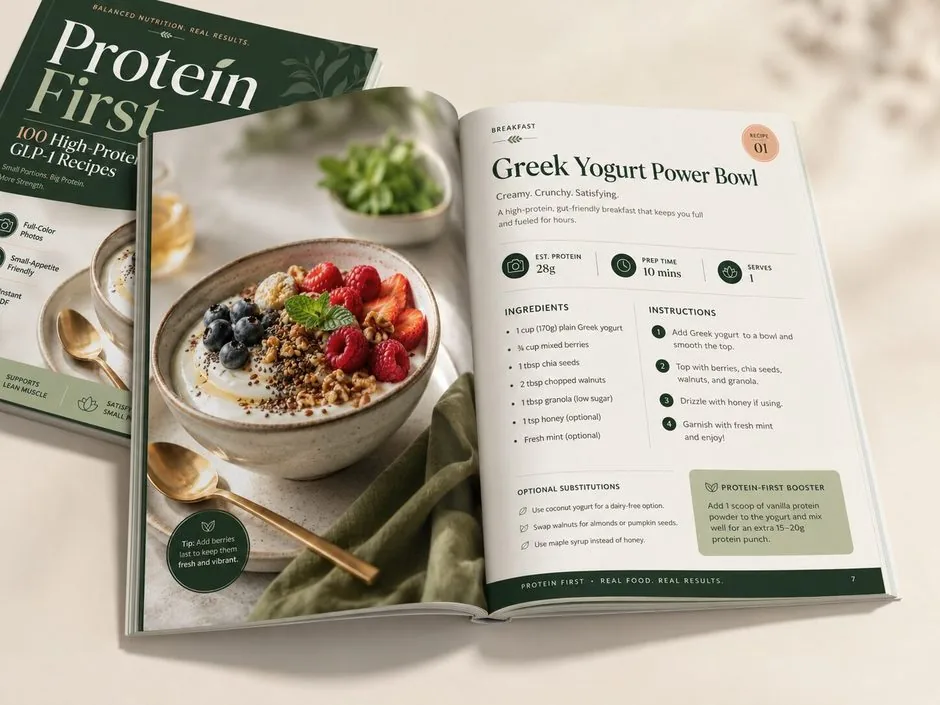
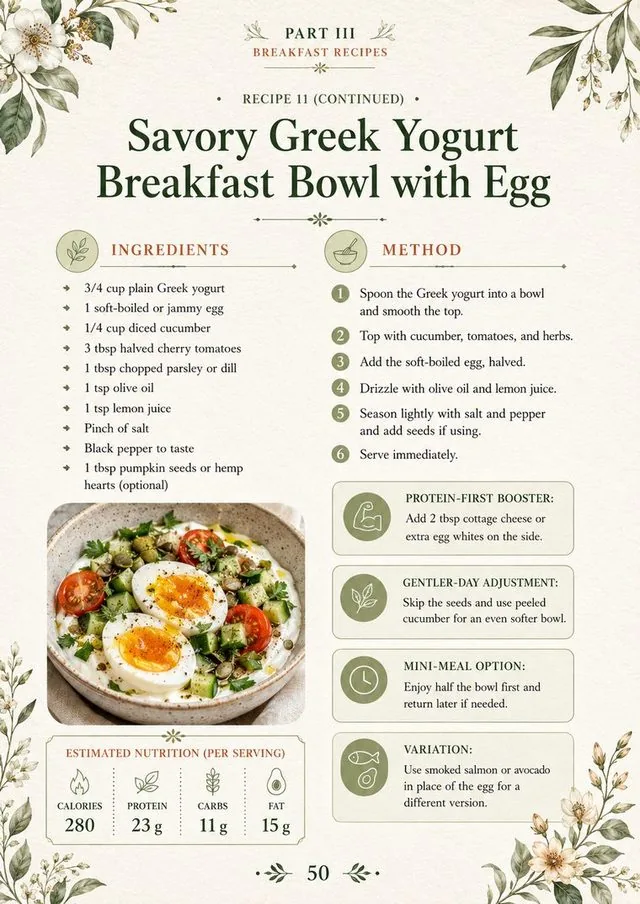
Every recipe includes the complete ingredient list, detailed preparation steps, serving guidance, estimated nutrition information, substitutions and a Protein-First Booster.

See the expected texture, serving size and presentation.
Know exactly how much effort the recipe requires before you begin.
Understand how much protein the recipe may contribute to your day.
Begin with a smaller portion and adjust according to your appetite and professional guidance.
Clear directions written for everyday home cooks.
A simple option for adding more protein when you need it.
Suggestions for modifying temperature, texture, seasoning or portion size when food feels more difficult.
Alternative ingredients for preference, availability or common dietary restrictions.
Know what can be refrigerated, frozen or divided into individual portions.
Nutrition values are estimates and can vary according to brands, ingredients and serving sizes.
You do not feel the same every day. Your recipe book should not pretend that you do.
Smaller, softer recipes and options that can be divided into several mini meals.
These categories are organizational tools, not treatments for medication side effects. Persistent or severe symptoms should be discussed with a qualified healthcare professional.
The opening chapter shows you how to use the book from your very first meal.
Use the protein goal recommended by your physician, registered dietitian or another qualified professional.
Identify whether today feels like a very-low, low or steadier-appetite day.
Start with the meal or snack that feels most realistic instead of trying to redesign your entire day at once.
Adjust the recipe when you need more protein without necessarily preparing another complete meal.
Use the tracker to observe which recipes, temperatures, textures and times of day work best for you.
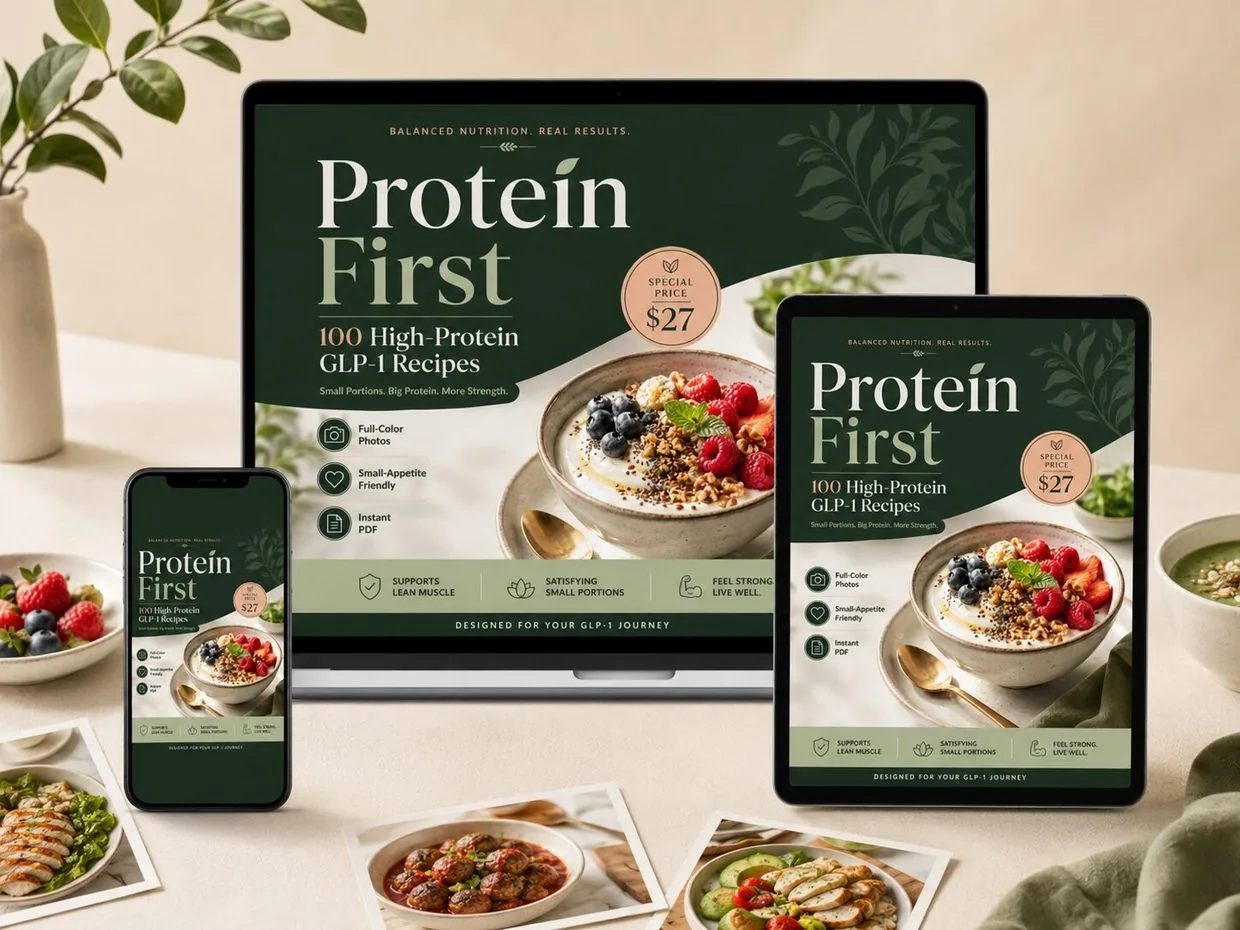
Complete your purchase and receive immediate access to the digital book. Open it on your phone, tablet or computer. You can also print individual pages or the complete book.
Use the recipe categories and tags to find an option that matches your appetite, energy and preferred texture.
Prepare a manageable portion, follow your individualized nutrition guidance and use the optional protein booster when appropriate.
The guide cannot make every day easy. It can make the question "What can I eat?" much easier to answer.
A single dietitian consultation may cost considerably more. Protein First gives you a reusable library of meal ideas you can return to every day.
Secure checkout · Instant delivery · 30-day satisfaction guarantee

Download the book, explore the recipes and prepare a few meals. If you feel the guide does not make high-protein eating simpler or more practical for you, contact us within 30 days of purchase for a full refund.
No complicated forms and no pressure to keep something that is not useful to you.
Your investment is protected for 30 full days.
Developed from the everyday challenges reported by adults adapting their eating habits during GLP-1 treatment.
No. Protein First is an educational recipe and meal-planning resource. It does not provide medical advice, diagnosis or treatment. Always follow the instructions of your prescribing clinician and seek professional guidance for individualized nutrition needs.
The recipes were developed around eating challenges commonly experienced by adults using prescribed GLP-1 or GLP-1/GIP medications, including products marketed as Ozempic®, Wegovy®, Mounjaro® and Zepbound®. The book is not affiliated with or endorsed by any medication manufacturer.
Protein First is designed to make protein-rich eating more practical. Body composition is also influenced by total food intake, health status, rate of weight loss, physical activity and individual factors.
"Ozempic face" is an informal expression, not a medical diagnosis. Protein First focuses on supporting adequate nourishment and protein intake rather than promising a cosmetic outcome.
Many recipes include smaller serving suggestions, soft or sippable textures and ways to divide one recipe into several mini meals. However, an inability to eat or drink enough, persistent vomiting or signs of dehydration should be discussed promptly with a healthcare professional.
The book includes milder, cooler and lower-aroma options that some readers may find easier to approach.
No. Most recipes can be prepared with ordinary protein-rich foods. Some recipes provide protein powder as an optional ingredient or booster.
The majority of recipes use familiar supermarket ingredients such as eggs, yogurt, cottage cheese, chicken, turkey, fish, beans, tofu, rice, oats and frozen fruit. Substitutions are included whenever practical.
Yes. The book contains vegetarian options using eggs, dairy, tofu, legumes and other protein sources. It is not designed as a completely vegan recipe book.
Some recipes provide substitutions, but the book cannot guarantee that every recipe is appropriate for every allergy or medical condition. Carefully review ingredient labels and seek individualized advice when necessary.
No. Protein First is a digital PDF. You receive access electronically and can read it on a phone, tablet or computer or print it for personal use.
Access is delivered immediately after successful payment through the email address used at checkout.
Yes. The recipes are ordinary high-protein meals and can continue to be used after medication, provided they remain appropriate for your personal nutrition needs.
Yes. The recipes are not limited to women. The guide can be used by any adult for whom the recipes and nutritional approach are appropriate.
You may request a refund within 30 days of purchase by contacting the support email listed on the website. Include the email address used for your order.
Stop trying to invent a high-protein meal every time you open the refrigerator. Get 100 photographed recipes created for the way eating feels on a GLP-1.
One-time payment: $27
Instant download · No subscription · 30-day satisfaction guarantee
Your next protein-first meal can begin today.